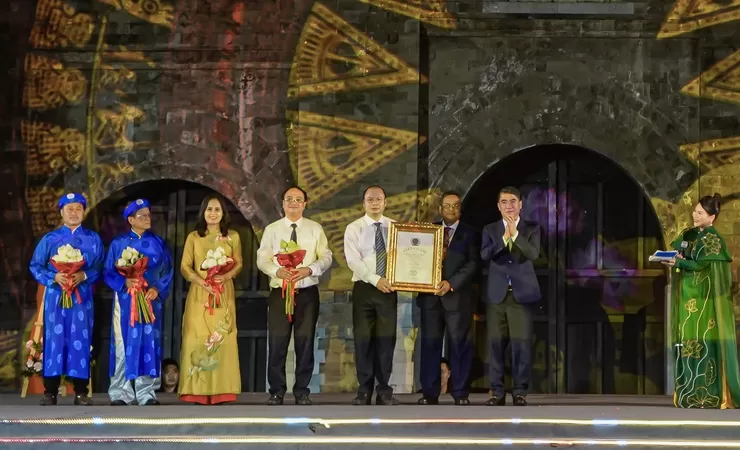
If approved, the village would join Bat Trang pottery and Van Phuc silk as one of the first rural Vietnamese craft villages to receive formal WCC recognition in 2025.
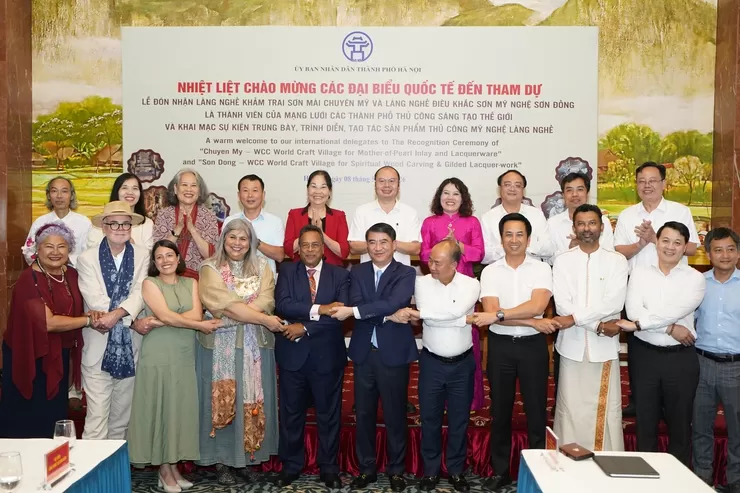
THE HANOI TIMES — A senior delegation from the World Crafts Council (WCC) has completed a decisive two-day on-site evaluation of Chuyen My Village’s bid to join the global creative craft communities network, marking a major step forward for one of Vietnam’s most renowned traditional craft centres.
The three-member team, WCC Vice-President for Africa Nadia Meer, Asia-Pacific Vice-President Sundeep Kumar and Vietnam representative Le Ba Ngoc, visited the mother-of-pearl inlay and lacquerware village in Hanoi’s Phu Xuyen Commune from November 16 to 17.
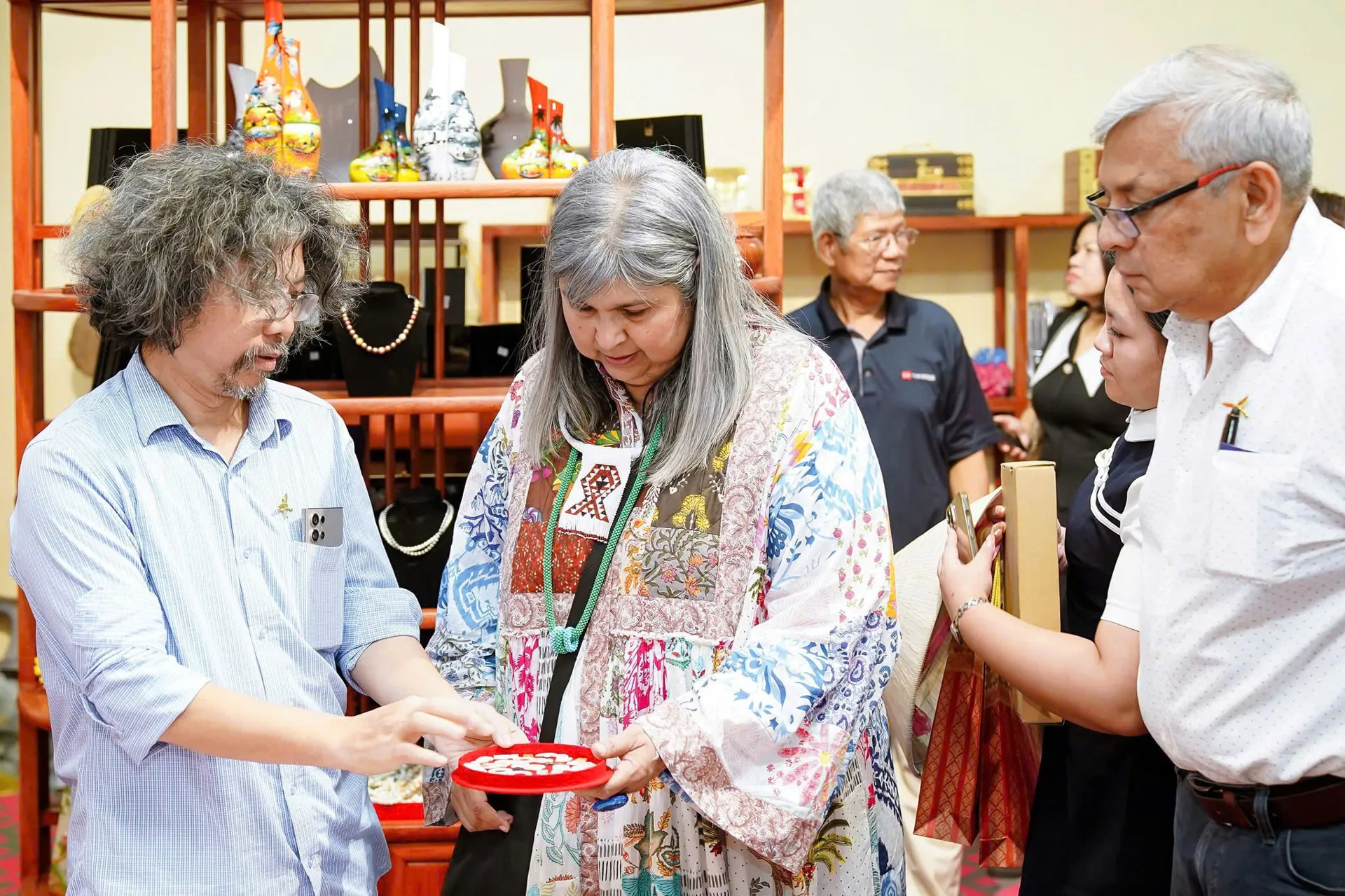
The WCC delegation, including Vice-President for Africa Nadia Meer (center) and Asia-Pacific Vice-President Sundeep Kumar (right) and Vietnam representative Le Ba Ngoc (left), evaluated the mother-of-pearl inlay and lacquer products of Chuyen My village. File Photos
Their programme began at the ancestral temple of Chuon Ngo Hamlet, a national heritage site where villagers honour the craft’s legendary founders believed to have introduced mother-of-pearl techniques more than 1,000 years ago.
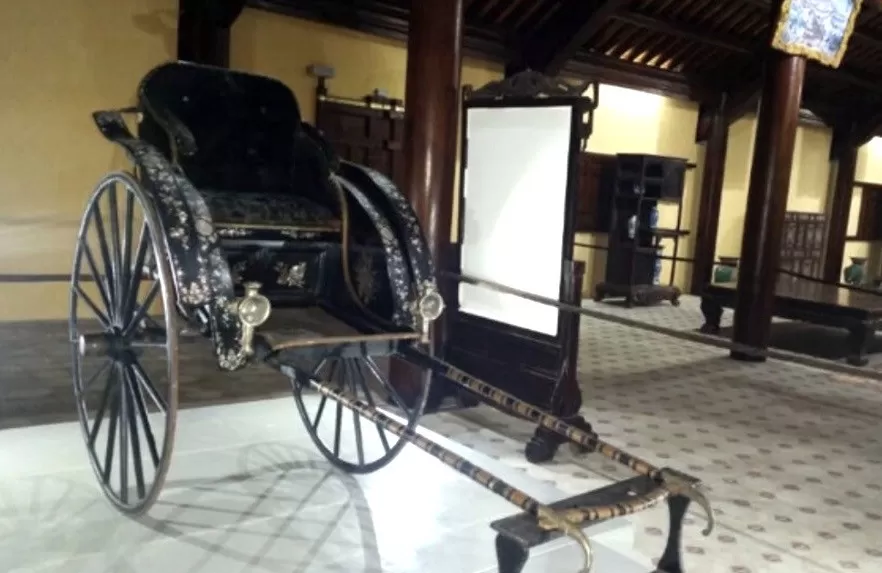
The delegation later toured the modern Chuyen My Lacquer and Mother-of-Pearl Product Introduction Centre, which showcases everything from traditional altar cabinets and landscape screens to minimalist contemporary furniture exported to markets including Europe, North America and Japan.

The WCC delegation visited some traditional mother-of-pearl inlay workshops at Chuyen My village. File photo
Over two days, evaluators spent long periods in family workshops along the village’s narrow alleys. Artisans demonstrated each labour-intensive step, while younger craftsmen highlighted recent innovations such as traceable and sustainable shell sourcing, reduced chemical use in lacquer production and new design lines blending traditional motifs with modern aesthetics.
The team also visited historic clan houses in Chuon Trung and Chuon Thuong Hamlets and the centuries-old Boi Khe Communal Hall, underscoring the craft’s deep cultural and spiritual roots.
Local officials briefed the team on ongoing investment in vocational training and plans for a dedicated craft museum to preserve historical tools and documents.

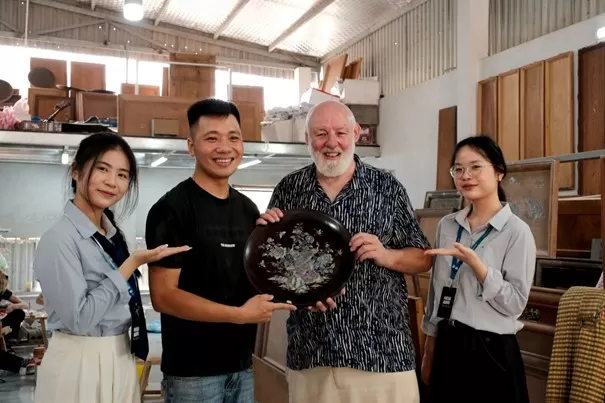
WCC Vice-President for Africa Nadia Meer (second right) was introduced some traditional mother-of-pearl inlay products at Chuyen My village. File photo
WCC Asia-Pacific Vice-President Sundeep Kumar was particularly impressed with vocational training classes for young artisans observed during the visit.
“To develop sustainably and integrate into international markets, craft villages need to understand foreign customers’ tastes and preferences, while preserving traditional values but adapting to global trends,” he said, according to Lang Nghe Viet magazine.
Kumar also encouraged expanded cooperation with international designers to innovate designs and elevate Vietnamese handicrafts.
A crowded month in the craft village
The evaluation followed a busy November for Chuyen My, which from November 7–16 hosted both the commune-level Craft Products and Safe Agricultural Products Fair 2025 and served as a venue for Hanoi’s International Craft Village Conservation and Development Festival.
Around 200 international delegates, including craft specialists, buyers and journalists from more than 30 countries, visited the village during the events.

The WCC delegation was introduced some traditional mother-of-pearl inlay products at Chuyen My village. File photo
At the 10-day fair, artisans demonstrated the 20-plus stages of mother-of-pearl inlay, from selecting iridescent oyster and abalone shells to embedding them into layers of natural lacquer.
The fair concluded with reported sales and signed contracts exceeding VND3 billion (approximately US$ 120,000), according to the Chuyen My People’s Committee.
Nguyen Huu Chi, Chairman of the Chuyen My People’s Committee, said Chuyen My is the cradle of many exquisite handicrafts, especially mother-of-pearl inlay and lacquerware.
“Our products have become symbols of Vietnamese cultural beauty and are now present in many countries, promoting the essence of Vietnamese craftsmanship,” Chi told the Hanoimoi Newspaper.
He said the village began preparing its WCC dossier in 2023, with support from Hanoi authorities and the Vietnam Craft Villages Association, adding that recognition would strengthen exports and creative tourism.
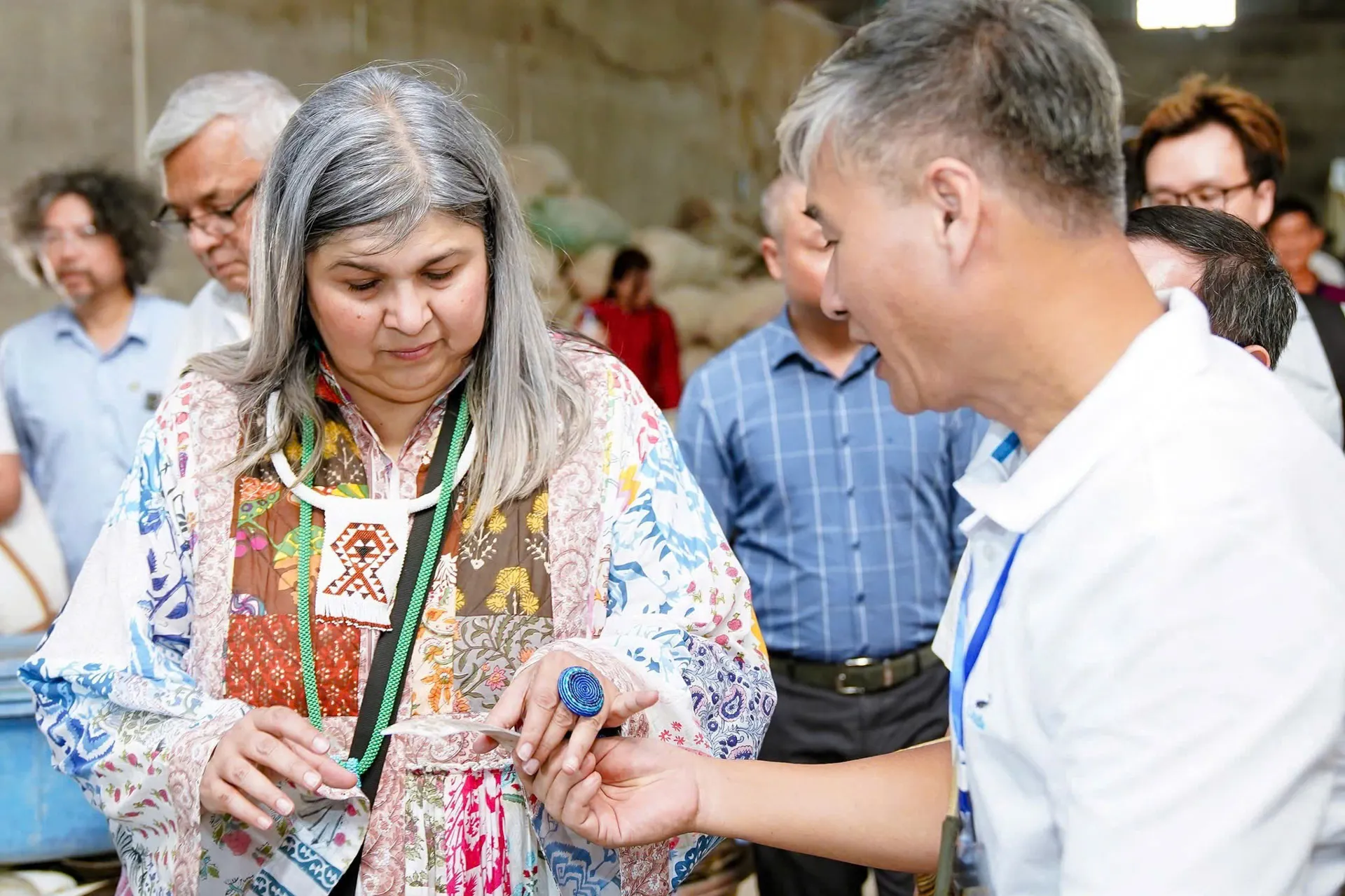
WCC Vice-President for Africa Nadia Meer (left) was introduced some traditional mother-of-pearl inlay products at Chuyen My village. File photo
According to local authorities, Chuyen My’s application aligns with the city’s craft-village development strategy. The capital has 305 recognised craft villages, though only a few have achieved international designation.
Earlier in 2025, Bat Trang pottery village and Van Phuc silk village became the first rural Vietnamese communities to secure WCC-affiliated recognition.
If approved, Chuyen My’s inclusion would bolster Hanoi’s positioning in global creative industries, support projected annual handicraft export growth of 5-8 percent and accelerate infrastructure upgrades under the city’s craft-village development plan through 2030.
No timeline has been announced for the final decision, but the seniority of the delegation, including two continental vice-presidents, is widely viewed as a positive indication.